
Pressure Equalization in Vent Membranes
Pressure equalization is a key function of vent membranes. It allows sealed enclosures to balance internal and external pressure changes caused by temperature fluctuations, altitude variation or environmental stress. This prevents deformation, leakage and mechanical failure.
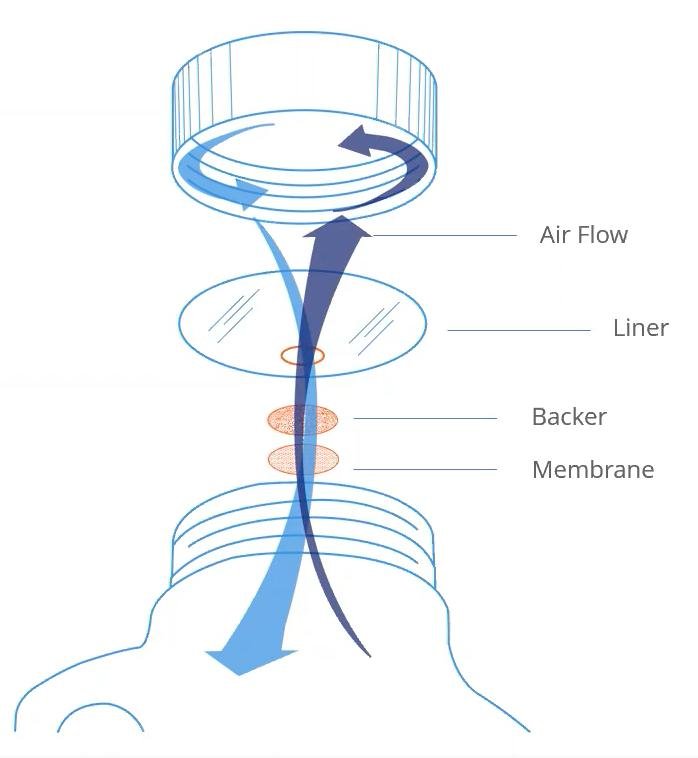
How Pressure Equalization Works
When temperature or altitude changes, gas inside a sealed enclosure expands or contracts. Vent membranes provide a controlled pathway for air exchange, preventing pressure imbalance.
Temperature Change
Heat increases internal gas volume, cooling reduces it.
Altitude Variation
External atmospheric pressure changes during transport or outdoor use.
Airflow Regulation
Microporous membranes allow controlled gas movement.
Pressure Balance
Internal and external pressure remain stable and safe.
Scientific Principle Behind Pressure Equalization
Gas pressure changes follow thermodynamic relationships. When temperature increases, gas expands and pressure rises inside a sealed enclosure.
This principle explains why vent membranes are required in sealed systems. Without controlled airflow, pressure differences can exceed material limits and cause deformation or leakage.
Key Engineering Factors
Enclosure Volume
Larger volumes require higher airflow capacity for faster equalization.
Temperature Range
Extreme temperature cycles increase pressure variation intensity.
Response Time
Vent membranes must react quickly to pressure changes.
Membrane Type
ePTFE, PP and composite materials offer different flow characteristics.
Why Pressure Equalization Matters
Prevents Housing Deformation
Stops casing from bulging or collapsing under pressure stress.
Protects Seals
Reduces stress on gaskets and sealing interfaces.
Improves IP Performance
Maintains waterproof and dustproof ratings over time.
Reduces Condensation
Helps moisture escape before it forms inside enclosures.
Related Technical Pages
Need Pressure Control Solutions?
We help engineers design venting systems that maintain stable pressure performance in real-world environments.