Waterproof vs Breathable Membranes
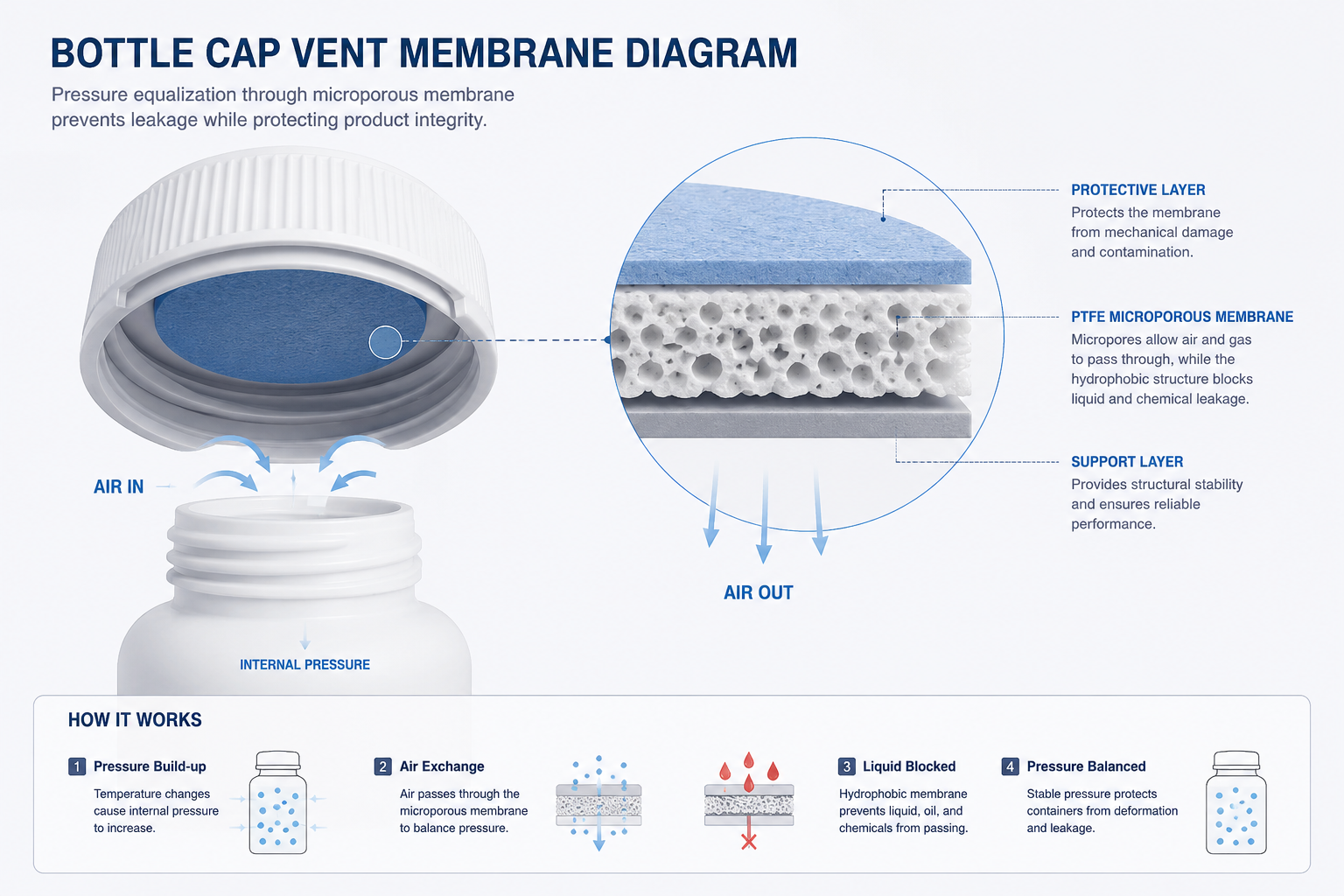
Waterproof and breathable are not opposite properties. Modern vent membranes are engineered to block liquid water while allowing water vapor and air molecules to pass through. This combination is achieved through microporous or molecular transport structures used in industrial sealing systems.
Key Difference Explained
Waterproofing refers to resistance against liquid water penetration, while breathability refers to the ability to allow water vapor or air to pass through a material.
Waterproof
Blocks liquid water based on pore size and surface tension effects.
Breathable
Allows water vapor and gas molecules to pass through microporous structure.
Not Opposites
A material can be both waterproof and breathable at the same time.
Engineering Balance
Performance depends on pore size, structure and material chemistry.
How Both Properties Work Together
Microporous Design
Membranes contain pores smaller than water droplets but larger than gas molecules.
Surface Tension Barrier
Liquid water is blocked due to surface tension effects at pore openings.
Vapor Diffusion
Water vapor molecules move freely through interconnected pore channels.
Pressure Driven Flow
Air movement is controlled by pressure differences across the membrane.
Waterproof vs Breathable Comparison
This comparison shows how waterproof materials, breathable materials and vent membranes perform differently in real industrial environments. Vent membranes combine both functions for reliable protection and airflow control.
| Property | Waterproof Materials | Breathable Materials | Vent Membrane |
|---|---|---|---|
| Liquid Water Blocking | ★★★★★ | ★☆☆☆☆ | ★★★★★ |
| Water Vapor Transfer | ★☆☆☆☆ | ★★★★★ | ★★★★★ |
| Airflow Control | ★☆☆☆☆ | ★★★★☆ | ★★★★☆ |
| Condensation Reduction | ★☆☆☆☆ | ★★★★☆ | ★★★★★ |
| Pressure Equalization | ★☆☆☆☆ | ★★☆☆☆ | ★★★★★ |
| Industrial Application Range | Medium | Limited | Wide |
Why This Difference Matters
Waterproof materials block liquid water but often trap moisture inside. Breathable materials allow vapor release but may not fully prevent liquid ingress. Vent membranes solve this contradiction by combining microporous structure technology that enables both protection and controlled airflow.
Why This Difference Matters in Industry
Prevents Seal Failure
Pressure imbalance can damage seals if not properly vented.
Improves IP Ratings
Proper venting helps maintain IP67/IP68 performance.
Reduces Condensation
Allows moisture vapor to escape from sealed systems.
Increases Reliability
Protects electronics and packaging under harsh conditions.
Need Help Choosing the Right Membrane?
We help engineers select between waterproof, breathable and vent membrane solutions based on real application conditions.