Chemical Resistance Testing for Vent Membranes
Ventrase chemical resistance testing evaluates membrane durability, material compatibility and long-term performance when exposed to industrial chemicals, fertilizers and harsh environments.
Explore Ventrase Technology
What Is Chemical Resistance Testing?
Chemical resistance testing evaluates whether vent membrane materials maintain their structure, sealing performance and airflow capability after exposure to different chemicals and industrial environments.
Chemical Compatibility Evaluation
Testing determines whether membrane materials remain stable when exposed to chemicals, solvents and industrial liquids.
Material Performance Verification
Chemical exposure testing verifies changes in strength, airflow and waterproof performance after environmental stress.
Long-Term Application Reliability
Testing supports material selection for chemical packaging, agrochemical containers and industrial venting systems.
Ventrase Chemical Resistance Testing Process
Ventrase evaluates membrane durability and compatibility through controlled chemical exposure tests combined with airflow, waterproof and structural performance verification.
Chemical Resistance Testing Methods
Professional testing methods help determine whether vent membrane materials can maintain reliable performance in aggressive chemical environments.
Chemical Compatibility Test
Evaluates whether membrane materials remain stable when exposed to different chemicals and industrial liquids.
Airflow Performance Test
Measures airflow retention before and after chemical exposure to verify breathable performance.
Waterproof Protection Test
Confirms the membrane continues to provide liquid barrier protection after environmental stress.
Chemical Resistance Testing Applications
Chemical resistance verification is essential for vent membranes used in packaging, industrial equipment and protection systems exposed to aggressive environments.
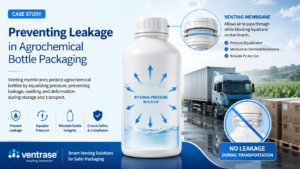
Agrochemical Packaging
Testing confirms vent membrane durability for pesticide and fertilizer containers exposed to chemical liquids during storage and transportation.
View Products →
Chemical Container Venting
Chemical resistance testing evaluates whether venting materials maintain airflow and sealing performance in industrial chemical packaging.
Technology →
Electronics Protection
Testing helps ensure protective vents maintain reliability in outdoor equipment and electronic enclosures exposed to environmental stress.
View Products →
Chemical Resistance Performance Verification
After chemical exposure testing, Ventrase evaluates whether membrane structures continue to provide reliable airflow, waterproof protection and mechanical stability.
Chemical Resistance Comparison of Vent Membrane Materials
Different membrane materials provide different levels of chemical resistance. Material selection depends on application environment, chemical exposure and performance requirements.
| Material | Chemical Resistance | Typical Applications |
|---|---|---|
| ePTFE Membrane | ★★★★★ Excellent | Harsh chemical environments, electronics protection, industrial applications |
| PP Membrane | ★★★★ Very Good | Chemical packaging, industrial containers, vent components |
| PE Membrane | ★★★ Good | General packaging ventilation solutions |
Frequently Asked Questions
What is chemical resistance testing?
Chemical resistance testing evaluates whether vent membrane materials can maintain their physical structure, airflow capability and waterproof performance after chemical exposure.
Why is chemical resistance important for vent membranes?
Vent membranes used in chemical packaging must withstand aggressive environments while maintaining pressure equalization and sealing performance.
Which materials can be tested?
Ventrase supports testing of ePTFE, PE, PP and composite membrane materials for different industrial applications.
Which industries require chemical resistance testing?
Applications include agrochemical packaging, chemical containers, lubricant packaging, electronics protection and industrial equipment.
Professional Chemical Resistance Testing Solutions
Ventrase provides reliable chemical resistance testing to help customers select suitable vent membrane materials and improve product safety in demanding applications.
Explore Ventrase Technology View Vent Products