
How Is ePTFE Made? Manufacturing Process Explained
Learn how ePTFE membrane is manufactured through controlled PTFE expansion technology. Discover the production process, microporous structure formation and why expanded PTFE provides waterproof breathable performance.
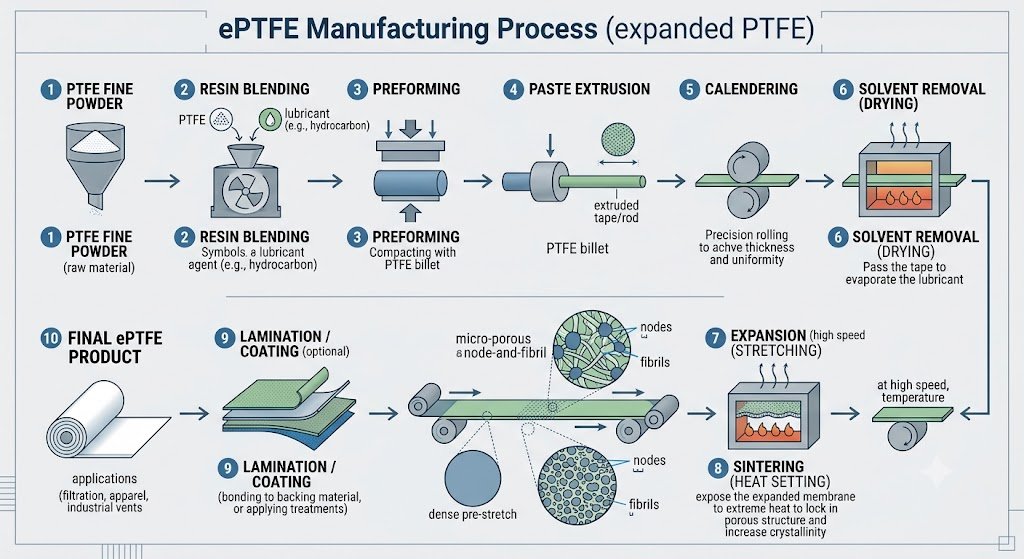
ePTFE (expanded polytetrafluoroethylene) is an advanced membrane material produced by expanding PTFE under controlled manufacturing conditions.
Unlike traditional PTFE materials, ePTFE contains a unique microporous structure that allows air and vapor transmission while blocking liquid water.
This special structure makes ePTFE widely used in waterproof breathable membranes, industrial venting, chemical packaging, electronics protection and battery applications.
What Is ePTFE Manufacturing?
The manufacturing process of ePTFE starts with PTFE (poly tetrafluoroethylene) resin. Through controlled forming, expansion and heat treatment processes, PTFE is transformed into a microporous membrane structure.
The key difference between conventional PTFE and ePTFE is the expansion process. By stretching PTFE material under specific conditions, manufacturers create a network of microscopic pores.
PTFE material is expanded in a controlled direction to create interconnected micropores. These pores provide excellent airflow while maintaining waterproof protection.
ePTFE Manufacturing Process Overview
The production of ePTFE membrane generally includes several critical stages:
1. PTFE Raw Material Preparation
High-quality PTFE resin is selected and prepared for further processing.
2. Paste Extrusion
PTFE resin is mixed with processing aids and formed into a suitable shape through extrusion.
3. Controlled Expansion
The PTFE structure is stretched to create the unique microporous network.
4. Heat Treatment
Thermal processing stabilizes the expanded structure and improves membrane performance.
Why The Manufacturing Process Matters
The manufacturing process directly affects the final performance of ePTFE membrane.
Micropore Size Control
Controls airflow performance, waterproof capability and membrane efficiency.
Membrane Strength
Proper expansion and stabilization improve mechanical durability.
Application Performance
Manufacturing quality determines suitability for packaging vents, electronics and industrial protection.
Step 1: PTFE Raw Material Preparation
The first step in ePTFE manufacturing is selecting and preparing high-quality PTFE resin.
PTFE is a fluoropolymer material known for its excellent chemical resistance, low friction properties and high temperature stability.
During manufacturing, PTFE resin particles are carefully controlled to ensure consistent membrane performance.
High Purity PTFE Resin
High-quality resin helps achieve stable expansion performance and uniform microporous structures.
Material Consistency
Consistent particle characteristics improve production stability and final membrane quality.
Chemical Stability
PTFE provides excellent resistance against chemicals used in demanding applications.
Step 2: PTFE Paste Extrusion Process
After PTFE resin preparation, the material undergoes paste extrusion to form a suitable intermediate structure.
During this process, PTFE powder is mixed with a processing lubricant and compressed into a uniform shape.
The extrusion process determines the initial orientation of PTFE particles before expansion.
The extrusion stage creates a consistent PTFE structure that can later be expanded into a microporous membrane.
Step 3: Drying and Preforming Process
After extrusion, the processing lubricant needs to be removed through a controlled drying process.
Proper drying conditions help maintain the physical structure of PTFE before the expansion stage.
Controlled Temperature
Maintains material stability during lubricant removal.
Uniform Structure
Ensures consistent material properties before stretching.
Process Stability
Improves repeatability of the ePTFE manufacturing process.
Step 4: Controlled Expansion Process
The expansion process is the most important step in creating ePTFE membrane.
During expansion, PTFE is stretched under controlled conditions to create a three-dimensional microporous network.
This unique structure gives ePTFE its famous combination of waterproof protection and breathable performance.
Micropore Formation
Stretching creates millions of interconnected microscopic pores inside the membrane.
Airflow Performance
The pore structure allows air molecules and vapor to pass through efficiently.
Waterproof Protection
The pore size prevents liquid water penetration while maintaining breathability.
How Expansion Creates ePTFE Properties
The controlled stretching process changes the internal structure of PTFE and creates the characteristics that make ePTFE different from conventional materials.
| Manufacturing Step | Effect On Membrane |
|---|---|
| PTFE Expansion | Creates microporous structure. |
| Stretch Control | Determines airflow and mechanical strength. |
| Process Optimization | Improves waterproof breathable performance. |
Step 5: Heat Treatment and Membrane Stabilization
After the expansion process, ePTFE membrane undergoes controlled heat treatment to stabilize its structure.
This stage helps maintain the expanded microporous network and improves the long-term reliability of the membrane.
Structure Stabilization
Heat treatment helps lock the expanded PTFE structure and maintain consistent pore characteristics.
Improved Mechanical Strength
Proper thermal processing improves durability and resistance to mechanical stress.
Long-Term Performance
Stable membrane structure supports reliable operation in demanding industrial environments.
How Does ePTFE Develop Its Microporous Structure?
The unique properties of ePTFE come from its three-dimensional microporous network.
During expansion, PTFE forms a structure consisting of nodes connected by extremely fine fibrils.
This structure creates millions of interconnected paths that allow gas molecules to pass while blocking liquid water.
The pore structure of ePTFE provides a balance between air permeability, waterproof protection and environmental resistance.
Air Transmission
Allows air and vapor exchange for pressure equalization.
Water Blocking
Prevents liquid water from entering protected systems.
Contamination Protection
Helps reduce dust, moisture and environmental exposure.
Factors Affecting ePTFE Membrane Performance
The final performance of ePTFE membrane depends on multiple manufacturing factors.
1. Expansion Ratio
The expansion level affects pore structure, airflow performance and mechanical properties.
2. Material Quality
High-quality PTFE resin helps achieve stable and consistent membrane performance.
3. Processing Temperature
Temperature control influences membrane stability and physical characteristics.
4. Membrane Thickness
Thickness selection affects airflow, protection level and application suitability.
5. Surface Treatment
Additional treatments may improve performance for specific applications.
6. Quality Inspection
Testing ensures membrane performance meets application requirements.
ePTFE Manufacturing Quality Control
Reliable ePTFE membrane production requires strict quality control throughout the manufacturing process.
| Testing Item | Purpose |
|---|---|
| Air Flow Testing | Measures breathable performance and ventilation capacity. |
| Water Entry Pressure Testing | Evaluates waterproof protection capability. |
| Chemical Resistance Testing | Confirms compatibility with chemical environments. |
| Mechanical Testing | Ensures durability during installation and operation. |
ePTFE Manufacturing Applications
Because of its waterproof breathable properties, ePTFE membrane is used in many industries requiring controlled ventilation and protection.
Chemical Packaging
Used in vent plugs and vent liners to manage container pressure changes and prevent leakage.
Electronics Protection
Protects electronic enclosures from moisture while allowing pressure equalization.
Battery Systems
Provides pressure management solutions for EV batteries and energy storage systems.
Industrial Equipment
Supports reliable ventilation in demanding industrial environments.
Why Choose ePTFE Membrane?
The advanced manufacturing process of ePTFE creates a unique membrane structure that combines waterproof protection, breathability and chemical resistance.
These characteristics make ePTFE an ideal material for applications requiring reliable pressure equalization and environmental protection.
Waterproof Protection
ePTFE prevents liquid water penetration while allowing air and vapor transmission.
Breathable Performance
The microporous structure enables continuous gas exchange and pressure balance.
Chemical Resistance
Provides excellent resistance against many chemicals and aggressive environments.
Long-Term Reliability
Stable membrane structure supports demanding industrial applications.
Ventrase ePTFE Vent Solutions
Ventrase provides advanced ePTFE vent products designed for chemical packaging, industrial containers and pressure equalization applications.
ePTFE Vent Plug
Press-fit vent solutions designed for reliable airflow and waterproof breathable protection.
Explore Vent Plugs →Breathable Vent Liner
Membrane-based sealing solutions for bottles, caps and packaging systems.
Explore Vent Liners →Customized ePTFE Membrane
Customized membrane solutions for special industrial applications.
Explore Membrane Materials →Recommended ePTFE Vent Products
Explore Ventrase ePTFE vent products for different container sizes and application requirements.
Frequently Asked Questions About ePTFE Manufacturing
What is ePTFE made from?
ePTFE is made from PTFE (polytetrafluoroethylene) through a controlled expansion process that creates a microporous membrane structure.
How is PTFE expanded into ePTFE?
PTFE is stretched under controlled conditions to create millions of interconnected micropores, transforming traditional PTFE into expanded PTFE membrane.
Why does ePTFE have micropores?
The expansion process creates a unique structure that allows air and vapor transmission while blocking liquid water.
What industries use ePTFE membrane?
ePTFE membranes are widely used in chemical packaging, electronics protection, battery systems, automotive components and industrial equipment.
How does manufacturing affect ePTFE performance?
Material quality, expansion ratio, processing conditions and quality control all influence final membrane performance.
Related ePTFE Knowledge Articles
Need Help Choosing The Right ePTFE Solution?
Ventrase provides technical support for selecting ePTFE vent plugs, vent liners and membrane solutions for your application.
Request Technical Consultation