Chemical jerry cans are widely used for agrochemicals, lubricants, cleaning liquids, industrial additives, and other liquid products. These containers must remain sealed during filling, warehouse storage, road transport, sea freight, and final use.
However, temperature changes can create pressure differences inside a sealed container. When internal pressure rises, stress is transferred to the cap, liner, bottle neck, and sealing interface. This can increase the risk of leakage, container deformation, damaged cartons, and product loss.
This case study shows how a breathable ePTFE vent membrane can improve pressure management for chemical jerry can packaging.
The Packaging Challenge
A chemical packaging customer used HDPE jerry cans with screw caps for liquid products. During export transport, the containers experienced changing temperatures between the production site, warehouse, shipping container, and destination market.
The packaging team identified several recurring risks:
- Internal pressure build-up during hot conditions
- Slight leakage around cap and liner areas
- Deformation of some containers during storage
- Damaged outer cartons caused by liquid leakage
- Higher cleaning and replacement costs during shipment
The customer needed a solution that could allow controlled airflow without creating an open path for liquid leakage or external contamination.
The Ventrase Solution
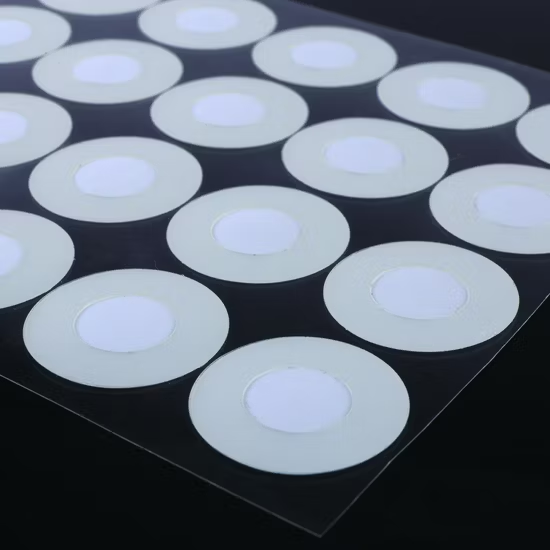
A vented closure design using an ePTFE membrane was introduced into the cap liner structure.
The ePTFE membrane has a microporous structure that allows air and vapor to pass through while helping block liquid water, dust, and contaminants. This allows the jerry can to gradually equalize internal and external pressure during temperature changes.
Instead of relying on an open vent hole, the membrane creates a protected airflow pathway inside the closure system.
For more information about the pressure-control principle, visit the Ventrase pressure equalization guide.
Application Testing Focus
The packaging design was evaluated under conditions that reflected normal transport and storage risks.
Key testing considerations included:
- Temperature cycling
- Container orientation during transport
- Cap and liner sealing performance
- Pressure equalization response
- Chemical compatibility
- Leakage resistance after storage
The goal was not simply to increase airflow. The vent membrane needed to provide balanced performance between pressure equalization and liquid protection.
Results and Packaging Benefits
After the vent membrane was integrated into the closure system, the packaging design showed improved pressure management during temperature changes.
The vented cap helped reduce pressure stress on the container and sealing area. This supported more stable package performance during storage and transport.
Key benefits included:
- Reduced risk of pressure-related leakage
- Improved protection for caps and sealing interfaces
- Lower risk of container swelling or deformation
- Better carton protection during shipping
- More reliable packaging performance for export logistics
- Flexible integration into existing cap and liner designs
The final vent specification depended on the product formulation, container volume, cap structure, required airflow, storage temperature, and transport conditions.
Why ePTFE Is Suitable for Chemical Packaging
ePTFE is commonly used for venting applications because its microporous structure can support airflow while maintaining a barrier against liquids and contaminants.
Its chemical stability and broad operating temperature range can make it suitable for demanding packaging environments. Learn more about the material structure and performance of an ePTFE vent membrane.
For chemical jerry cans, the membrane should always be selected and tested according to the specific liquid formulation and packaging design.
Custom Venting Support from Ventrase
Ventrase develops breathable vent membrane solutions for agrochemical bottles, chemical jerry cans, lubricant containers, industrial packaging, and other pressure-sensitive liquid applications.
Our team can support membrane selection based on airflow requirements, chemical compatibility, cap design, liner construction, container size, and transport conditions.
For custom vent membrane samples or technical consultation, contact Ventrase at info@ventrase.com.