
Chemical bottles, pesticide containers, lubricant bottles, and industrial jerry cans can experience internal pressure changes during filling, storage, and transport. Temperature fluctuations may cause air and vapor inside the package to expand or contract.
A venting solution can help equalize pressure and reduce stress on the bottle, cap, liner, and sealing area. Two common approaches are open vent holes and ePTFE vent membranes.
Although both methods can release pressure, their performance is very different.
What Is an Open Vent Hole?
An open vent hole is a direct opening in a cap, closure, or container wall. It allows air to move freely between the inside and outside of the package.
Open vent holes are simple and low-cost. However, they provide little protection against liquid leakage, moisture, dust, and external contaminants.
For packaging that contains chemicals, pesticides, or other liquid products, an open vent hole may create additional safety and transport risks.
What Is an ePTFE Vent Membrane?
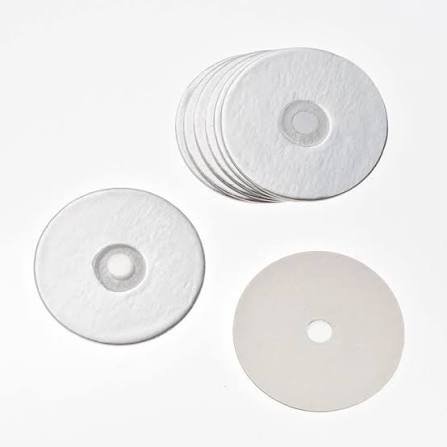
An ePTFE vent membrane is a microporous material designed to allow air and gas to pass through while helping block liquids and contaminants.
The membrane is often integrated into a cap, liner, vent plug, adhesive patch, or induction sealing structure. It provides controlled pressure equalization without leaving the package fully open.
ePTFE vent membranes are commonly used in chemical packaging, agrochemical bottles, automotive components, electronics enclosures, and industrial containers.
Key Differences Between ePTFE Vent Membranes and Open Vent Holes
| Feature | ePTFE Vent Membrane | Open Vent Hole |
|---|---|---|
| Airflow | Controlled airflow | High and uncontrolled airflow |
| Pressure equalization | Stable and gradual | Fast but difficult to control |
| Liquid leakage protection | Helps block liquids | High leakage risk |
| Dust and contamination protection | Helps block particles and contaminants | Limited protection |
| Water resistance | Designed for liquid resistance | No water barrier |
| Chemical packaging suitability | Suitable when properly selected | Usually not suitable for liquid chemicals |
| Integration options | Caps, liners, vent plugs, adhesive patches | Direct hole in cap or container |
| Packaging appearance | Clean and integrated | May require additional protective structure |
Leak Protection Performance
The biggest difference is liquid protection.
An open vent hole can allow pressure to escape, but it can also allow liquid to leak if the bottle is tilted, inverted, dropped, or exposed to vibration during transport.
An ePTFE vent membrane provides a breathable barrier. Its microporous structure allows air and gas to move while helping prevent liquid from passing through.
For pesticide bottles, chemical jerry cans, and industrial liquid containers, this balance between airflow and leakage resistance is important.
Pressure Equalization Performance
Both options can reduce internal pressure. However, an ePTFE vent membrane provides more controlled airflow.
This can help packaging engineers match venting performance with container size, liquid formulation, cap structure, storage temperature, and transport conditions.
For example, a large chemical jerry can may require a different airflow level from a small pesticide bottle. A custom membrane solution can be designed around these application requirements.
Learn more about pressure equalization solutions at Ventrase.
When to Use an Open Vent Hole
An open vent hole may be suitable for non-liquid products or applications where contamination, water entry, and leakage are not concerns.
Examples may include dry equipment housings, low-risk ventilation areas, or temporary packaging systems.
For liquid chemical packaging, open vent holes should be evaluated carefully because they may compromise leakage protection.
When to Use an ePTFE Vent Membrane
An ePTFE vent membrane is generally a better option when packaging needs both pressure equalization and protection from liquids, dust, and contaminants.
It is commonly used for:
- Agrochemical bottles
- Pesticide containers
- Chemical jerry cans
- Lubricant packaging
- Industrial liquid containers
- Cleaning chemical bottles
- Automotive fluid packaging
For more application examples, visit the Ventrase resources center.
Choosing the Right Venting Solution
The best venting solution depends on the product formulation, bottle size, closure design, transport conditions, airflow requirements, and leakage protection target.
Open vent holes may provide simple airflow, but they do not offer reliable liquid protection. ePTFE vent membranes provide a more balanced solution for demanding chemical packaging applications.
Ventrase develops breathable membrane solutions for agrochemical, chemical, industrial, and liquid packaging applications. For custom vent membrane samples or technical support, contact Ventrase at info@ventrase.com.