
How Is ePTFE Membrane Tested? Waterproof, Airflow and Performance Evaluation

ePTFE membranes are widely used in protective vent applications because they provide a unique combination of waterproof protection, breathability, and chemical resistance.
However, membrane performance must be carefully tested to ensure reliability in demanding environments such as chemical packaging, battery systems, electronics, and industrial equipment.
Professional ePTFE membrane testing evaluates multiple performance characteristics, including waterproof capability, airflow rate, pressure resistance, and durability.
This article explains the most important testing methods used to evaluate ePTFE membrane performance.
Related technology:
Why Is ePTFE Membrane Testing Important?
Different applications require different levels of protection and airflow performance.
For example:
- Chemical containers need stable pressure equalization
- Battery systems require safe gas release
- Electronic devices need waterproof protection
- Industrial equipment requires long-term durability
Testing ensures that the membrane performs consistently under real operating conditions.
Key Performance Tests for ePTFE Membranes
1. Air Permeability Test
Air permeability testing measures how easily air can pass through the ePTFE membrane.
This performance determines the venting capability of the membrane.
Important factors include:
- Airflow rate
- Pressure difference
- Membrane area
- Pore structure
A higher airflow rate can improve pressure equalization, but the membrane must still maintain waterproof performance.
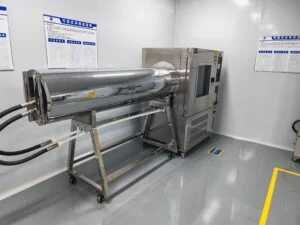
2. Water Entry Pressure Test (WEP)
Water Entry Pressure testing evaluates the pressure level at which water begins to penetrate the membrane.
This is one of the most important tests for waterproof breathable membranes.
Higher water entry pressure indicates stronger waterproof protection.
The test evaluates:
- Hydrophobic performance
- Pore structure quality
- Water resistance capability
3. Bubble Point Test
The bubble point test measures the largest pore size within a membrane.
It helps verify:
- Pore consistency
- Membrane quality
- Manufacturing stability
A controlled pore structure is essential for balancing airflow and waterproof performance.
4. Pressure Resistance Test
Pressure resistance testing evaluates whether the membrane can maintain performance under pressure changes.
This is especially important for:
- Chemical containers
- Battery enclosures
- Sealed electronic housings
Related article:
What Is Pressure Equalization?
5. Chemical Resistance Test
Industrial applications may expose membranes to aggressive chemicals.
Chemical resistance testing evaluates whether the membrane maintains performance after exposure to:
- Solvents
- Fertilizers
- Pesticides
- Industrial liquids
ePTFE is naturally resistant to many chemicals, making it suitable for demanding environments.
6. Temperature Resistance Test
Many industrial products operate under extreme temperatures.
Temperature testing evaluates membrane stability under:
- High temperature conditions
- Low temperature environments
- Thermal cycling
7. Long-Term Durability Testing
A protective vent must maintain performance throughout the product lifecycle.
Durability testing evaluates:
- Mechanical stability
- Aging resistance
- Environmental exposure
- Performance consistency
ePTFE Membrane Performance Testing Summary
| Test Method | Purpose |
|---|---|
| Air Permeability Test | Measures airflow capability |
| Water Entry Pressure Test | Evaluates waterproof performance |
| Bubble Point Test | Checks pore structure |
| Chemical Resistance Test | Confirms material compatibility |
| Temperature Test | Evaluates environmental stability |
| Durability Test | Verifies long-term reliability |
How Testing Improves ePTFE Vent Product Quality
For industrial vent applications, membrane performance directly affects product reliability.
Proper testing helps ensure:
- Stable airflow performance
- Reliable waterproof protection
- Consistent manufacturing quality
- Long service life
Applications Requiring Strict ePTFE Testing
Chemical Packaging
Chemical containers require reliable venting to prevent pressure buildup and deformation.
Chemical Packaging Vent Solutions
Battery Systems
Battery enclosures require controlled gas release while protecting against moisture.
Battery Vent Protection Solutions
Electronics Protection
Electronic devices need waterproof protection while maintaining pressure balance.
How Ventrase Ensures ePTFE Membrane Reliability
Ventrase focuses on membrane technology development and performance optimization for industrial applications.
Quality control includes:
- Material inspection
- Performance testing
- Production consistency checks
- Application validation
Learn about Ventrase solutions:
Frequently Asked Questions
What tests are used for ePTFE membranes?
Common tests include air permeability, water entry pressure, bubble point, chemical resistance, temperature resistance, and durability testing.
How is waterproof performance measured?
Water entry pressure testing measures the resistance of an ePTFE membrane against liquid water penetration.
Why is airflow testing important for vent membranes?
Airflow testing ensures that the membrane can provide effective pressure equalization while maintaining protection.
Conclusion
ePTFE membrane testing is essential for ensuring reliable performance in waterproof breathable applications.
Through comprehensive testing of airflow, waterproof capability, chemical resistance, and durability, engineers can select the right membrane solution for demanding environments.
Ventrase provides engineered ePTFE vent solutions designed for reliable pressure equalization and protection.