What Is a Waterproof Breathable Membrane? Technology Explained
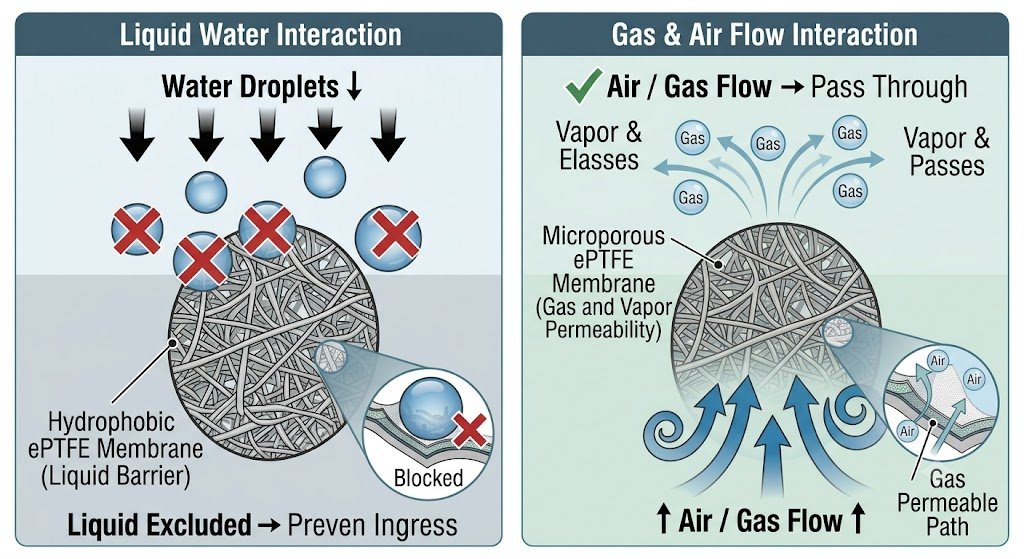
A waterproof breathable membrane is an advanced functional material that allows air and vapor to pass through while preventing liquid water from entering.
This unique combination of waterproof protection and breathability makes it widely used in industrial protection, electronics, battery systems, chemical packaging, and outdoor equipment.
Among various membrane materials, ePTFE (expanded polytetrafluoroethylene) is one of the most widely used technologies for high-performance waterproof breathable applications.
This article explains how waterproof breathable membranes work, their structure, key properties, and industrial applications.
What Is a Waterproof Breathable Membrane?
A waterproof breathable membrane is a microporous or functional membrane designed to achieve two seemingly opposite functions:
- Prevent liquid water penetration
- Allow air and water vapor transmission
Unlike traditional waterproof materials that completely block airflow, waterproof breathable membranes provide controlled gas exchange while maintaining protection against moisture.
The technology is based on carefully engineered pore structures that are small enough to block water droplets but large enough to allow gas molecules to pass.
How Does a Waterproof Breathable Membrane Work?
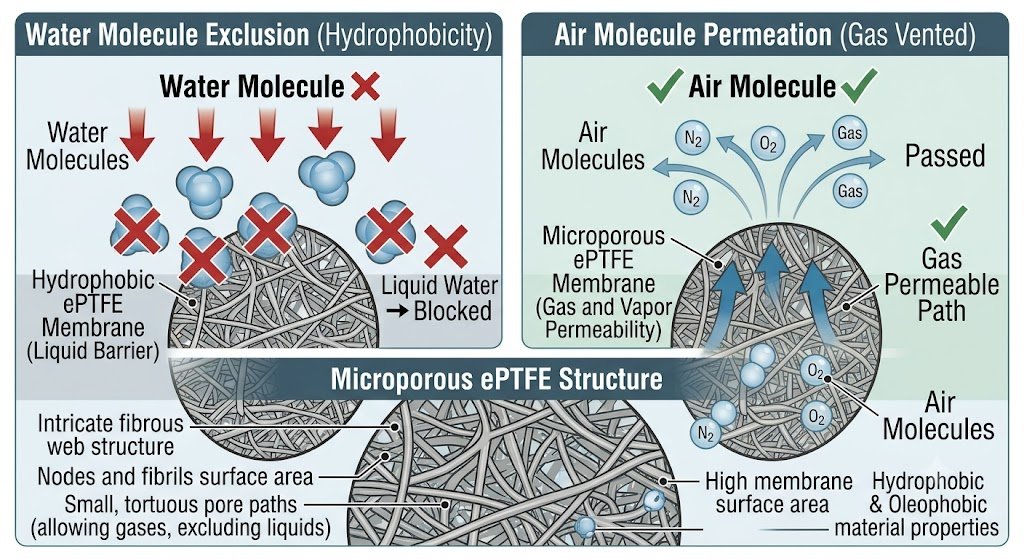
The working principle depends on the relationship between pore size, surface energy, and pressure difference.
Microporous Structure
High-performance membranes contain millions of microscopic pores.
For ePTFE membranes:
- The pores are smaller than liquid water droplets
- The pores are larger than air molecules
- Gas can pass through while water remains blocked
Hydrophobic Surface Properties
Many waterproof breathable membranes use hydrophobic materials that repel water.
This prevents water from wetting the membrane surface and entering through the pores.
Learn more about ePTFE material properties:
Why Is ePTFE Used for Waterproof Breathable Membranes?
ePTFE has become a preferred material because it provides an excellent balance of waterproof protection, airflow performance, and chemical resistance.
| Property | Benefit |
|---|---|
| Microporous Structure | Allows controlled air transmission |
| Hydrophobic Nature | Prevents liquid penetration |
| Chemical Resistance | Suitable for demanding environments |
| Temperature Stability | Works under extreme conditions |
Waterproof Breathable Membrane vs Traditional Waterproof Materials
| Feature | Traditional Waterproof Material | Waterproof Breathable Membrane |
|---|---|---|
| Water Protection | Yes | Yes |
| Air Exchange | Limited | Excellent |
| Pressure Equalization | No | Yes |
| Condensation Control | Limited | Improved |
Key Benefits of Waterproof Breathable Membranes
1. Waterproof Protection
The membrane prevents rain, splash, and liquid contamination from entering protected systems.
2. Air and Vapor Transmission
The breathable structure allows gases and moisture vapor to escape, reducing internal condensation.
3. Pressure Equalization
In sealed systems, pressure changes caused by temperature or altitude can create stress.
A waterproof breathable membrane allows controlled pressure balance.
Related technology:
What Is Pressure Equalization?
Applications of Waterproof Breathable Membranes
Electronics Protection
Electronic devices require protection from water and dust while managing internal pressure changes.
Applications include:
- Sensors
- Outdoor equipment
- Industrial controllers
Battery Systems
Battery enclosures may experience temperature changes and gas generation during operation.
Waterproof breathable membranes help:
- Balance pressure
- Protect against moisture
- Improve safety
Chemical Packaging
Chemical containers may generate internal pressure during storage and transportation.
Waterproof breathable vent solutions help prevent:
- Container swelling
- Leakage
- Packaging failure
Industrial ePTFE Vent Solutions
How Are Waterproof Breathable Membranes Tested?
Industrial membrane performance is evaluated through several tests:
- Air permeability testing
- Water entry pressure testing
- Chemical resistance testing
- Temperature resistance testing
- Durability testing
Testing ensures the membrane performs reliably in real-world applications.
Future Development of Waterproof Breathable Technology
As industrial products become more compact and highly protected, demand for advanced breathable protection continues to grow.
Future applications include:
- Electric vehicles
- Energy storage systems
- Smart electronics
- Advanced industrial equipment
Conclusion
A waterproof breathable membrane provides a unique combination of water protection, airflow, and pressure management.
Among available technologies, ePTFE membranes offer excellent performance for demanding industrial applications.
From chemical packaging to battery systems and electronics protection, waterproof breathable technology helps engineers design safer and more reliable products.
Contact Ventrase for Custom Waterproof Breathable Vent Solutions